
Overview of Trane Thermostat Says Waiting: Quick Troubleshooting Guide
A Trane thermostat showing Waiting usually means a protective compressor delay. Brief waits are normal, but prolonged Waiting signals issues like wiring faults, a tripped condensate drain switch, or thermostat malfunction. Troubleshooting includes verifying settings and wiring, power-cycling or factory resetting the thermostat, bypass testing R/G and R/Y wires, checking the condensate drain and condenser unit, and calling a professional for complex electrical or HVAC faults.
Quick Solutions to Questions related to Trane Thermostat Waiting Status:
-
What does Waiting mean on a Trane thermostat?
It indicates a protective delay is in effect to protect the compressor, allowing pressure to equalize before starting. -
How long should I wait when the thermostat shows Waiting?
Brief pauses are normal; if Waiting persists for an extended period, further troubleshooting is needed. -
Can I troubleshoot Waiting myself?
Yes — verify settings, check wiring, inspect the condensate drain, power-cycle or factory reset the thermostat, and try bypass testing as described. -
What should I check if the condensate drain caused Waiting?
Inspect the condensate drain pan, remove any water to reset the condensate switch, then restart the system. -
When should I call a professional for Waiting on my Trane thermostat?
Contact a technician if Waiting persists after basic checks or if you suspect electrical or HVAC component faults beyond simple fixes.
If a Trane thermostat displays a ‘waiting’ message, it usually indicates that a delay is currently in effect to protect the compressor of the HVAC system. This built-in delay ensures the compressor does not start prematurely, which could potentially lead to damage. However, if the ‘waiting’ signal persists for an extended period, it could point to an issue requiring attention. Homeowners may experience this as a brief and routine pause in operation, but consistent or unusually long waiting periods signal a need for action.
Understanding the ‘waiting’ status on a Trane thermostat is crucial for maintaining a comfortable and functional home environment. The reasons behind the message can range from simple system checks to a need for technical troubleshooting. Whether the cause is a minor error easily resolved by the homeowner or an indication of a more significant problem that necessitates professional repair, responding appropriately to the ‘waiting’ message is essential for the continued health of the HVAC system and comfort within the home.
Key Takeaways
- A ‘waiting’ message serves as a protective delay for the HVAC compressor.
- Persistent ‘waiting’ indicates it’s time to troubleshoot the thermostat.
- Resolving the issue may require simple steps or professional help.
Quick Overview:
| Possible Reasons | Potential Solutions |
|---|---|
| Thermostat is in delay mode | Simply wait for the delay period to elapse |
| Loss of communication with HVAC system | Inspect and ensure proper wiring connections between thermostat and HVAC |
| Condensate drain switch tripped | Check condensate drain, remove water, and restart the system |
| Thermostat malfunction | Consider replacing the thermostat for proper functionality |
These are some common reasons for a Trane thermostat displaying “Waiting” and corresponding solutions to address the issues.
Understanding Thermostat ‘Waiting’ Status
When a Trane thermostat displays a ‘Waiting’ status, it indicates a deliberate pause in the system’s operation. This is a safety feature and often a normal part of operation, but it can also be a sign of an underlying issue when prolonged.
What ‘Waiting’ Means
The ‘Waiting’ message on a Trane thermostat generally signifies that the system is in a delay mode to protect the compressor. During this period, the thermostat will not activate the heating or cooling cycles to allow the compressor time to equalize pressure. This prevents potential damage from short cycling.
Common Causes of ‘Waiting’ Status
- System Start-up Delay: This is a standard protection measure after the power to the unit has been interrupted.
- Thermostat Issues: Faulty wiring or hardware malfunctions within the thermostat itself may trigger the ‘Waiting’ message.
- Condensate Switch: An activated condensate drain switch resulting from a full drain pan can cause the system to enter a ‘Waiting’ state.
Troubleshooting steps might include verifying proper wiring and connections, inspecting the thermostat for error messages, and checking the condensate drain system. For a quick resolution to this issue, consult the guide on how to address the ‘Waiting’ message on Trane thermostats.
Troubleshooting Steps
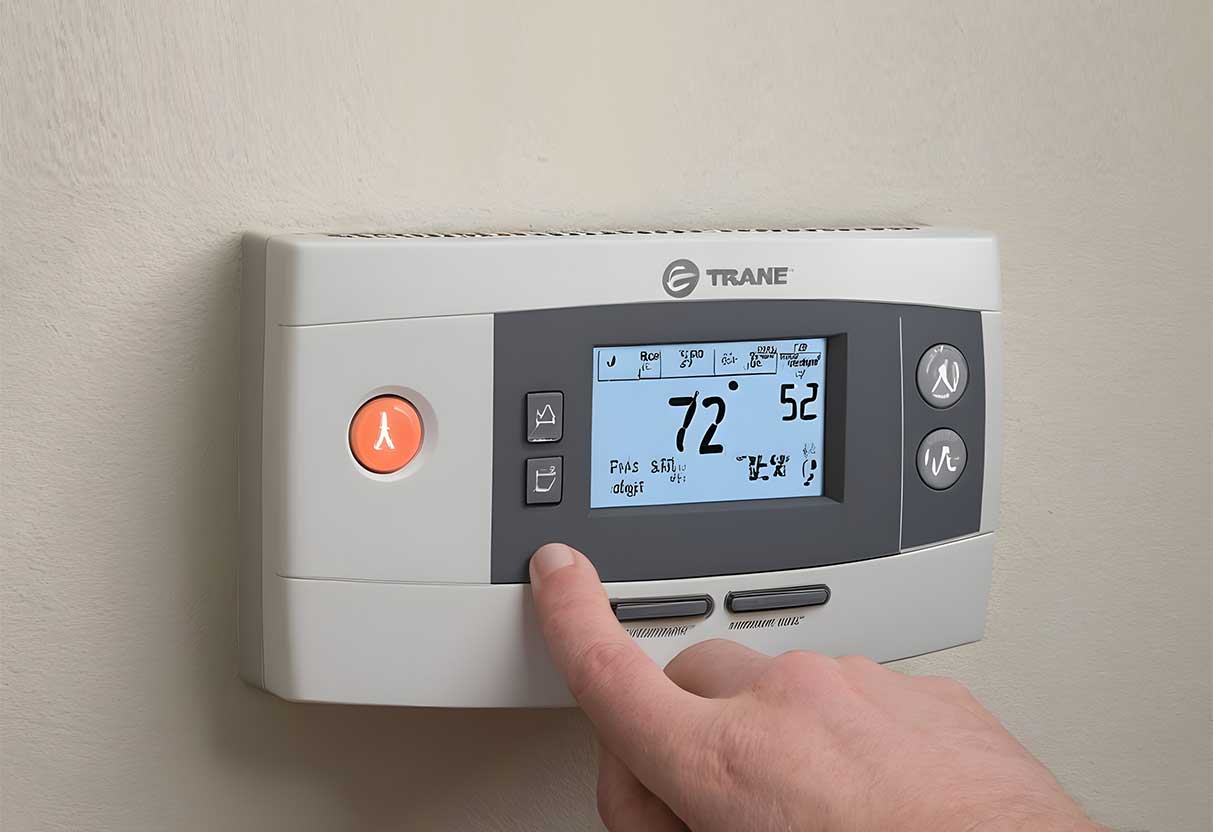
When a Trane thermostat displays the message “waiting,” it often indicates the system is initializing. However, if the message persists, specific steps should be taken to troubleshoot and rectify the issue.
Verifying Thermostat Settings
- Initial Check: Ensure the thermostat settings are correct, including system type and program.
- Mode and Schedule: Double-check the thermostat is set on the appropriate heating or cooling mode and that the schedule has not been inadvertently changed.
Resetting the Thermostat
- Power Cycling: Safely turn the thermostat off and then on again to reset its internal systems.
- Before Factory Reset – Bypass the Thermostat: If your thermostat shows “waiting” despite a lit display, try bypassing it. Remove the thermostat, connect the R and G wires to test the fan (blower fan should start), and connect R and Y wires to check the outdoor unit (wait for at least 5 minutes for the condenser to kick in). If the system works during bypass, the issue may be with the thermostat.
- Factory Reset: Conduct a factory reset by following the manufacturer’s instructions if the simple power cycle does not resolve the issue. Note that this will erase all custom settings.
Checking the HVAC System
- Inspection: Visually inspect the HVAC system for any signs of damage or blockage that could be causing the delay.
1- Inspect the condensate drain for a tripped switch. If water is present in the drain pan, drain it, and restart the system. Resetting the switch this way should get your system back to normal operation.
- Wiring Check: Confirm that all wiring connections are secure and not damaged.
1- Check the condenser unit: If your AC isn’t working and none of the previous steps have helped, check the condenser unit. Ensure the wiring is properly connected. If it looks good, check the circuit breaker for any tripping – if it has, reset it and see if that gets your system up and running.
Professional Assistance
- Complex Issues: For persistent problems or ones that appear to be beyond simple fixes, it is advisable to seek professional assistance.
- Safety First: If electrical issues or HVAC system components are suspected to be faulty, avoid self-repair and contact a qualified technician.
Frequently Asked Questions:
About The Author

Hassan Zaka
I am an expert in accounting and possess diverse experience in technical writing. I have written for various industries on topics such as finance, business, and technology. My writing style is clear and simple, and I utilize infographics and diagrams to make my writing more engaging. I can be a valuable asset to any organization in need of technical writing services.
Follow Us:LinkedinTwitter