
Overview of What Does EM Heat Mean on a Thermostat? (Complete Guide)
EM Heat stands for Emergency Heat — a manual backup heating mode that bypasses the heat pump and runs a secondary heat source (usually electric resistance, gas, or oil) when the heat pump fails or cannot keep up in extreme cold. Use it only for true emergencies like a broken or frozen outdoor unit or prolonged severe cold, then call an HVAC technician and switch back to normal HEAT to avoid high energy bills. AUX Heat is automatic assistance; EM Heat is manual emergency-only backup.
Quick Solutions to Questions related to EM Heat on a Thermostat:
-
What does EM Heat mean on my thermostat?
EM Heat means Emergency Heat, a manual backup heating mode that uses a secondary heat source when the heat pump cannot operate. -
How does EM Heat work?
It bypasses the heat pump and activates a backup heater, commonly electric resistance coils, to generate heat directly. -
When should I use EM Heat?
Use it only in emergencies such as heat pump failure, a frozen outdoor unit, or during prolonged extreme cold when the pump cannot maintain temperature. -
When should I not use EM Heat?
Do not use it for quick warm-ups, when AUX Heat appears, or when the heat pump is functioning, because it is expensive to run. -
Is EM Heat expensive to run?
Yes; emergency heat (often electric resistance) is 2–3 times less efficient than a heat pump and can greatly increase energy bills. -
What should I do after switching to EM Heat?
Call a licensed HVAC technician to diagnose and repair the heat pump, and switch back to normal HEAT once fixed or temperatures rise.
The Mysterious “EM Heat” Button
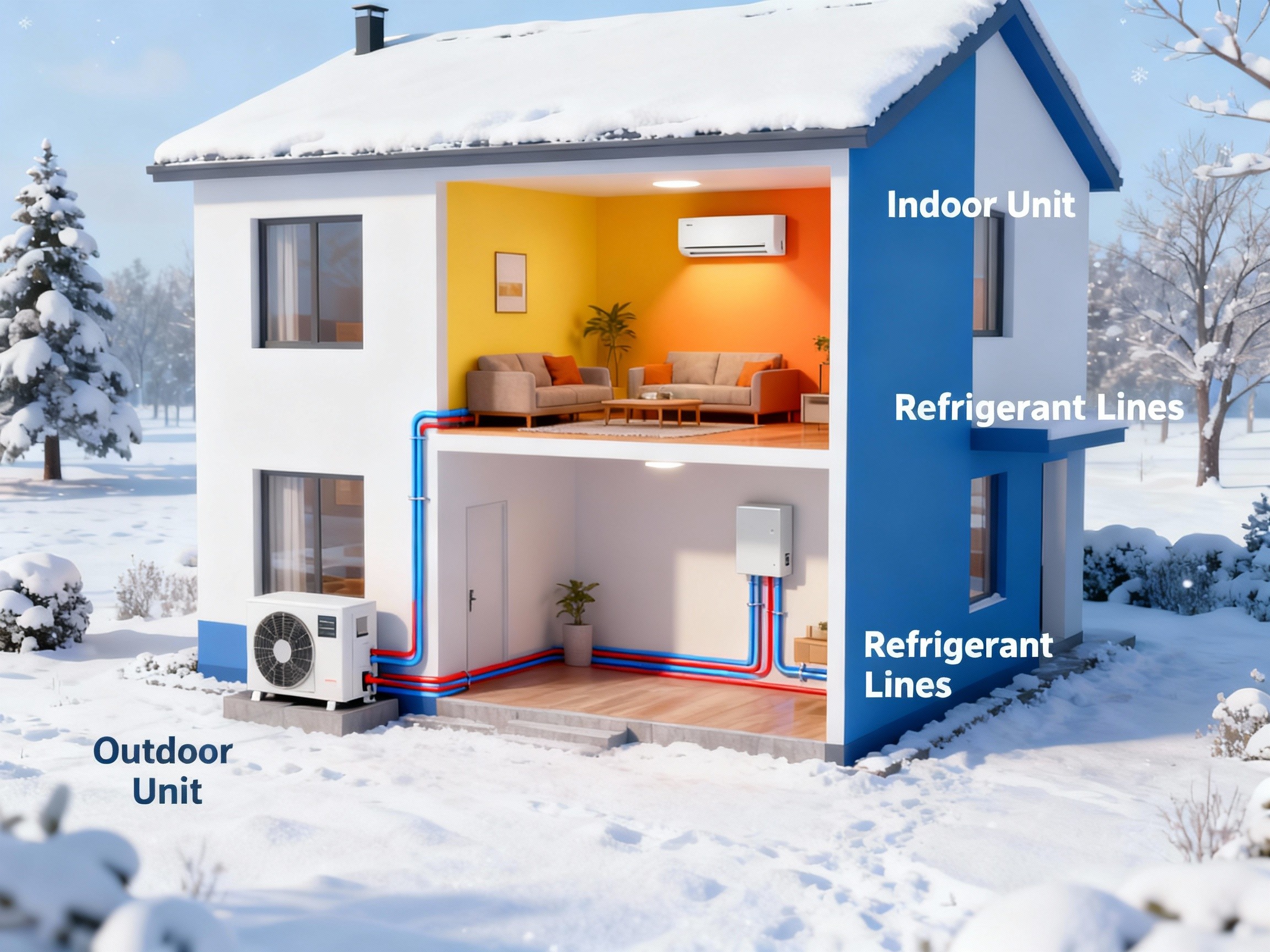
What Does EM Heat Mean on a Thermostat?
It’s freezing outside. Your home feels like a refrigerator, and your thermostat shows a setting you’ve never used before — “EM Heat.”
What does it mean? Should you turn it on?
Here’s the quick answer: EM Heat stands for “Emergency Heat.” It’s your backup heating system — designed to kick in when your heat pump fails or can’t keep up in extreme cold.
In this guide, we’ll explain what EM Heat is, how it works, and when to use (or avoid) it, so you can stay warm without shocking your energy bill.
Understanding Your Home’s Heating System (The Basics)
To understand EM Heat, you first need to understand the heart of your home’s heating system — the heat pump.
What Is a Heat Pump?
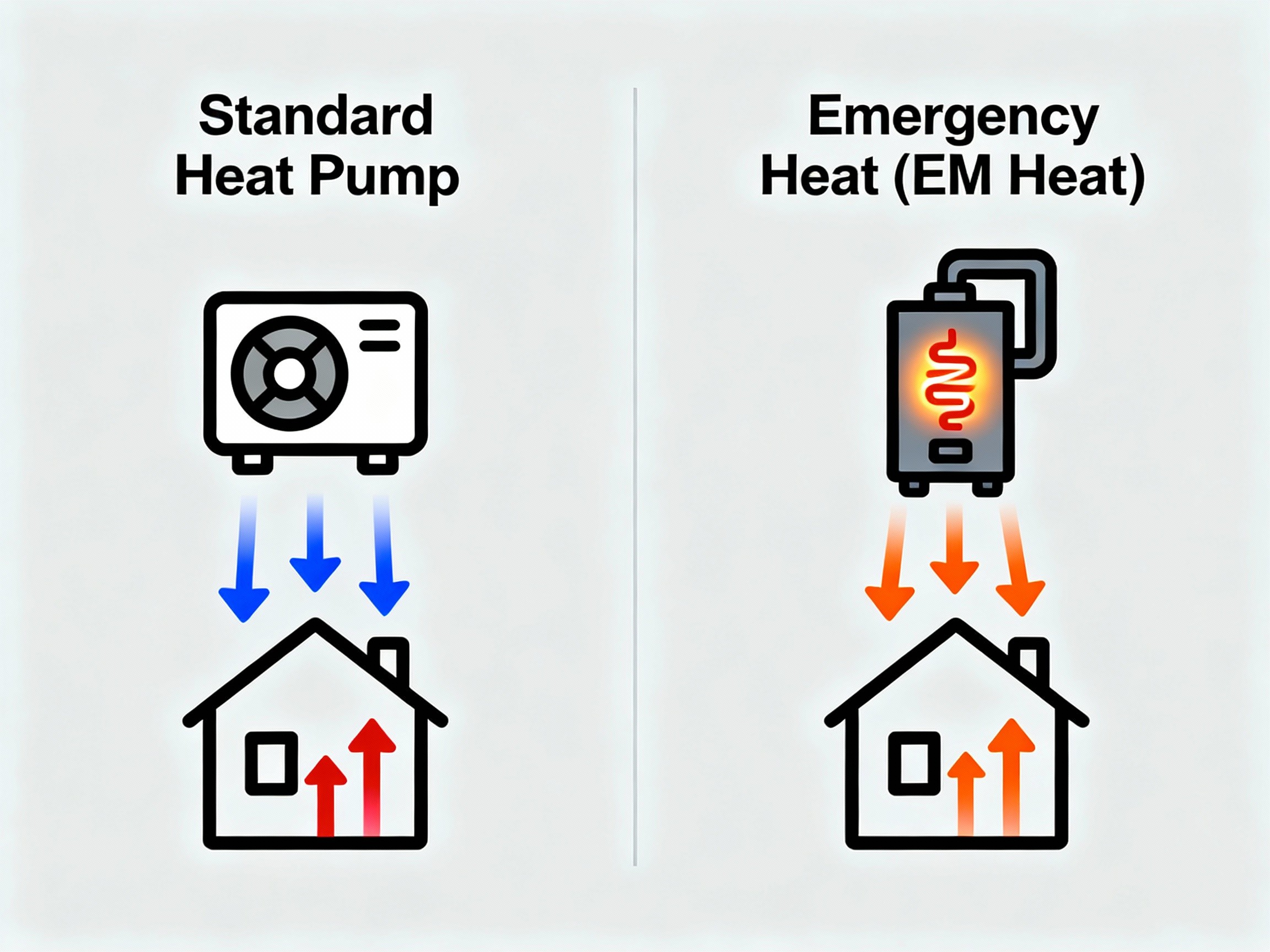
A heat pump doesn’t create heat like a furnace. Instead, it moves heat from one place to another.
- In summer: It acts like an air conditioner, pulling heat from inside your home and pushing it outside.
- In winter: It reverses direction, drawing warmth from the outdoor air and transferring it indoors.
Even when it’s cold outside, there’s still heat in the air — and a heat pump can use it efficiently.
The Limitation of Heat Pumps
When the temperature drops below 32°F (0°C), there’s less heat available outdoors. The heat pump must work harder and becomes less efficient.
That’s when your backup heating system — the EM Heat — comes into play.
What Is EM Heat? (The Deep Dive)
EM Heat stands for Emergency Heat, and it’s your home’s manual backup heating mode.
When you turn on EM Heat, your thermostat bypasses the heat pump and activates a secondary heat source to keep your home warm.
Common Types of Emergency Heat Sources:
- Electric Resistance Heat Strips (most common in all-electric homes)
- Gas Furnace (in dual-fuel systems)
- Oil Furnace (less common)
Auxiliary Heat vs. Emergency Heat
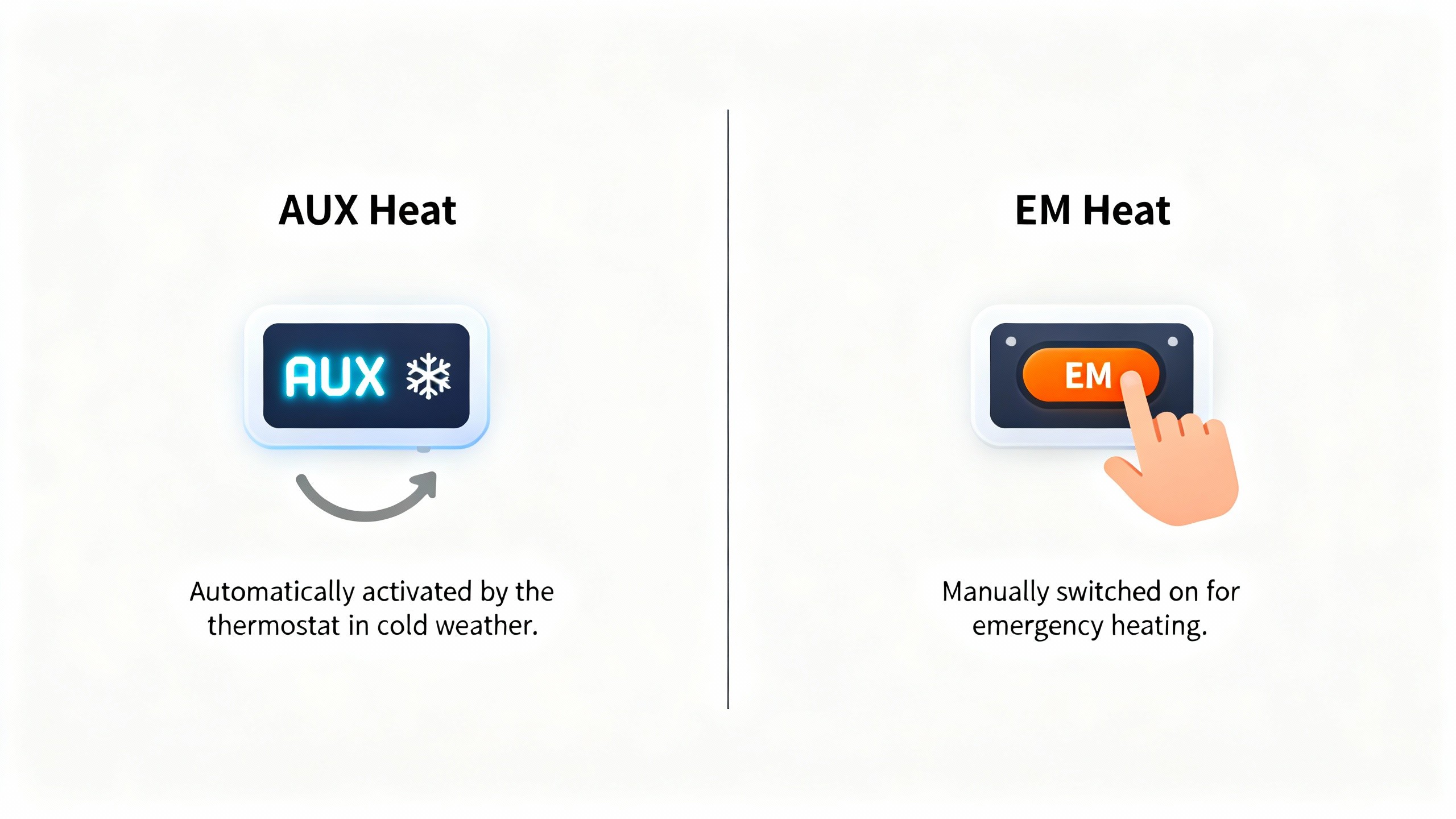
These two terms are easy to confuse, but they’re not the same thing:
- Auxiliary Heat (AUX):
This automatically turns on when the heat pump needs help — like during defrost cycles or when it’s extremely cold. It’s temporary and normal. - Emergency Heat (EM Heat):
This is manual. You activate it when the heat pump isn’t working or is frozen. It tells the system to use only the backup heat source.
💡 Think of EM Heat as your spare tire — great in an emergency, but not something you should drive on forever.
When Should You Use EM Heat? (The Right Times)
There are only a few specific situations where using EM Heat is appropriate — and they all involve emergencies.
- Heat Pump Failure
If your outdoor unit isn’t running, the compressor fails, or the unit is frozen solid, your home won’t warm up using normal settings.
This is when you should switch to EM Heat. It’s designed to keep your home comfortable until a technician repairs your system.
- Extremely Cold Weather (Below 20°F or -6°C)
During long, severe cold spells, your heat pump might run constantly and still struggle to maintain temperature.
In rare cases, switching to EM Heat can be more efficient than letting the system cycle endlessly between heat pump and auxiliary heat.
But remember — this is temporary use only. Always switch back once the cold passes or the pump recovers.
When Not to Use EM Heat (Common Misconceptions)
Here’s the biggest myth:
❌ “EM Heat is just a stronger or faster heat setting.”
This is false — and a very expensive mistake.
Why You Should Avoid It Unless Needed:
- EM Heat uses electric resistance heating, which is 2–3 times more costly to operate.
- It’s meant for emergencies, not everyday heating.
Don’t Use EM Heat When:
- You want a quick warm-up on a chilly morning.
- You see “AUX Heat” on your thermostat — that’s normal.
- Your heat pump is still working fine.
Leaving EM Heat on accidentally can skyrocket your power bill — and you won’t notice until the next billing cycle.
How to Safely Use EM Heat (Step-by-Step Guide)
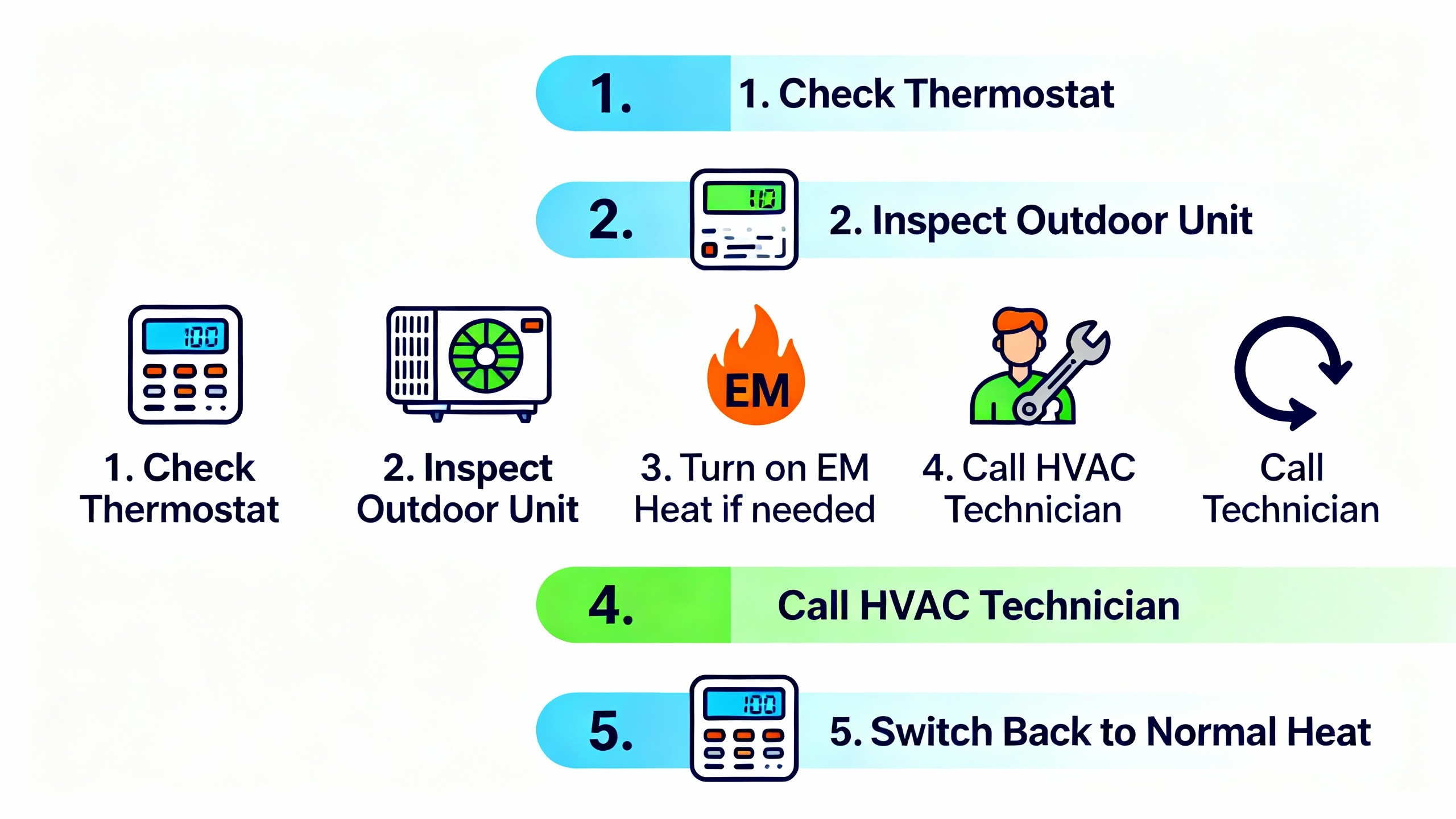
If your home is getting cold and you’re unsure what to do, follow this simple checklist:
- Check Thermostat Settings
Make sure it’s on “HEAT” and set higher than the current room temperature. - Inspect the Outdoor Unit
Listen for unusual noises or check if the unit is completely frozen. - Switch to EM Heat (If Necessary)
If the heat pump isn’t running, turn your thermostat to EM Heat. - Call an HVAC Technician
EM Heat is a temporary solution — a professional needs to diagnose and repair the root problem. - Switch Back to Normal “HEAT” Mode
Once the system is repaired or temperatures rise, turn EM Heat off to resume energy-efficient heating.
Key Takeaways: What You Should Remember About EM Heat
- EM Heat = Emergency Heat — your system’s backup heating mode.
- Use it only in true emergencies, like when the heat pump fails or during severe, prolonged cold.
- Avoid using it casually — it’s powerful but expensive.
- Call an HVAC professional if you’re unsure whether you need it.
When used correctly, EM Heat is your home’s safety net. But when misused, it can burn through your energy budget faster than you think.
So, the next time your thermostat flashes “EM Heat,” you’ll know exactly what it means — and when to use it wisely.
❄️ EM Heat on Thermostat – Frequently Asked Questions
Understanding the “EM Heat” Button on Your Thermostat
If you’ve ever noticed a button or setting labeled “EM Heat” on your thermostat and wondered what it does — you’re not alone. It often appears during cold snaps or when your heat pump struggles to keep up.
In this FAQ guide, our HVAC experts explain exactly what EM Heat means, how it works, and when (and when not) to use it so you can stay warm without driving up your energy bill.
- What does “EM Heat” mean on my thermostat?
“EM Heat” stands for Emergency Heat. It’s a backup heating mode used when your heat pump can’t operate properly — such as during a breakdown or extreme cold. Turning it on activates a secondary heat source (usually electric, gas, or oil) to keep your home warm until repairs are made.
- How does EM Heat work?
When EM Heat is turned on, your thermostat bypasses the heat pump entirely. Instead, it uses a backup heating element — most commonly electric resistance coils — that directly generate heat.
This system is powerful and reliable, but it uses more electricity than your heat pump.
- What’s the difference between EM Heat and AUX Heat?
These two terms often confuse homeowners, but here’s the key difference:
- AUX Heat (Auxiliary Heat): Automatically turns on when your heat pump needs help, like during a defrost cycle or very cold weather.
- EM Heat (Emergency Heat): Manually activated by you when the heat pump fails or can’t function.
💡 Think of AUX Heat as a helping hand — and EM Heat as the emergency backup.
- When should I use EM Heat?
Use EM Heat only in emergencies, such as:
- When your heat pump isn’t running, or the outdoor unit is frozen.
- During severe cold weather when the pump can’t maintain the set temperature for long periods.
Once EM Heat is on, contact a licensed HVAC technician right away. It’s meant for short-term use only.
- When should I NOT use EM Heat?
Avoid using EM Heat when:
- You simply want to heat your home faster.
- You see “AUX Heat” on your thermostat — that’s normal and not an emergency.
- Your heat pump is still functioning.
Leaving EM Heat on unnecessarily can double or even triple your power bill.
- Is EM Heat more expensive to run?
Yes — significantly more.
Emergency Heat uses electric resistance or fuel-based heating, which can be 2–3 times less efficient than your normal heat pump operation. It’s designed for short-term use only to prevent freezing conditions indoors.
- How do I turn EM Heat on and off?
- On most thermostats, simply switch the mode from “HEAT” to “EM HEAT.”
- Once your system is repaired or outdoor temperatures rise, switch back to “HEAT.”
That returns your system to efficient, everyday operation.
- What if EM Heat is the only way my home stays warm?
If your home only heats while EM Heat is active, your heat pump likely has a malfunction.
Keep EM Heat on temporarily for comfort, but schedule HVAC service immediately to prevent high bills and equipment strain.
- What happens if I leave EM Heat on by accident?
Your system will rely solely on the backup heater instead of the heat pump. This can cause your energy usage and bills to skyrocket.
When you notice it, switch back to “HEAT” right away.
- Key Takeaway – When to Use EM Heat
✅ Use EM Heat only during heat pump failure or severe cold spells.
❌ Don’t use it for everyday heating — it’s expensive and inefficient.
If you’re unsure, contact a professional HVAC technician to inspect your system.
🔍 Quick Summary
- EM Heat = Emergency Heat (manual backup)
- AUX Heat = Automatic assistance for your heat pump
- Use EM Heat only in true emergencies
- Turn it off once your heat pump is repaired or outdoor temps rise
Related Reading:
- [Aux Heat vs EM Heat: What’s the Difference?]
- [Heat Pump Not Blowing Warm Air? Here’s What to Do]
- [How to Tell If Your Heat Pump Is Frozen and How to Fix It]
Final Thoughts
Understanding how Emergency Heat (EM Heat) works can save you from unnecessary panic — and surprise energy bills.
It’s a great safety feature built into your thermostat, but it’s meant for short-term use only.
If your system seems to rely on EM Heat too often, that’s a sign your heat pump needs professional attention.
Contact your local HVAC service provider to inspect, repair, or tune your system before winter hits full force.
Related Links:
| # | Reference Title | Author / Source | Publisher / Website | Date | Link |
|---|---|---|---|---|---|
| 1 | What Is EM Heat on a Thermostat? | Timothy Thiele | The Spruce | Feb 22 2022 | Read on The Spruce |
| 2 | Aux Heat and Emergency Heat (Knowledge Base) | Trane Home Support Team | Trane Home | Jul 31 2024 | View on Trane |
| 3 | Heat Pump: Auxiliary Heat vs Emergency Heat | PFO Heating & Air Conditioning Team | Princeton Fuel & Air | Jan 15 2024 | Read on Princeton Fuel |
| 4 | The Difference Between Auxiliary and Emergency Heat | NETr Inc. Blog Team | NETr Inc. | Mar 14 2024 | Read on NETr Inc. |
| 5 | What’s the Difference Between Auxiliary and Emergency Heat? | ACS Systems Inc. HVAC Team | ACS Systems Blog | Mar 19 2024 | View Article |
| 6 | What Is EM Heat and When Should You Use It? | Jon Wayne HVAC Experts | Jon Wayne Service Company | May 16 2024 | Read on Jon Wayne |
| 7 | What Is Auxiliary Heat in a Heat Pump System? | Trane Residential Team | Trane Blog | Sep 23 2024 | View on Trane |
| 8 | Understanding Emergency Heat: What You Need to Know | Craighead Electric Cooperative Blog | Craighead Electric Coop | Dec 12 2024 | Read on Craighead Electric |
| 9 | What Is the Difference Between Auxiliary and Emergency Heat? | Pelican Wireless Help Center Team | Pelican Wireless Systems | 2021 | View Resource |
| 10 | What’s the Difference Between Auxiliary and Emergency Heat? | Anderson Air Blog Team | Anderson Air LLC | 2023 | Read on Anderson Air |
| 11 | How Does Emergency Heat Work?: 2025 Explanation | Sears Home Services Blog Team | Sears Home Services | 2025 | View on Sears |
| 12 | What Is EM Heat on Your Thermostat? | Bardi Heating & Cooling Experts | Bardi Blog | 2024 | Read on Bardi |
| 13 | What Is EM Heat? What Is the EM HT Switch on My Thermostat? | Honeywell Home Support Team | Honeywell Home | Sep 2 2025 | Visit Honeywell Home |
About The Author

Hassan Zaka
I am an expert in accounting and possess diverse experience in technical writing. I have written for various industries on topics such as finance, business, and technology. My writing style is clear and simple, and I utilize infographics and diagrams to make my writing more engaging. I can be a valuable asset to any organization in need of technical writing services.
Follow Us:LinkedinTwitter